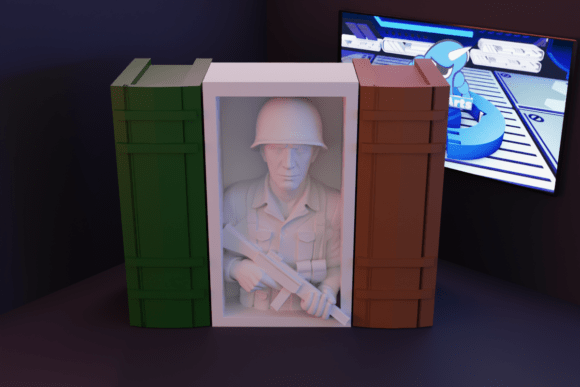
WWII Soldier Bookend: Integrating History and Organization into Your Workflow
In the intersection of functional decor and historical appreciation, the WWII Soldier Bookend emerges as a unique asset for professionals, educators, and hobbyists alike. This is not merely a static object; it is a tool that bridges the gap between digital design, physical manufacturing, and tangible organization. Whether you are managing a home library, curating a museum exhibit, or running a 3D printing service, understanding how to integrate this specific model into your workflow can enhance both the utility and the narrative quality of your space.
The value of the WWII Soldier Bookend lies in its dual nature. On one hand, it serves a practical purpose: organizing books, documents, and materials on shelves and desks. On the other, it acts as a conversation starter and an educational anchor, symbolizing discipline, history, and the gravity of the Second World War. For creators and business owners, leveraging such detailed assets requires a structured approach to planning, execution, and long-term maintenance.
Defining the Asset and Its Role in Design Workflows
The WWII Soldier Bookend is a digital 3D model available as an optimized STL file, designed specifically for additive manufacturing. Unlike generic bookends found in mass-market retail, this model offers exclusive detailing inspired by authentic military uniforms and postures from the 1940s. In a professional context, this distinction matters. When selecting assets for a project, the level of detail directly impacts the perceived value of the final output.
For 3D printing enthusiasts and small business owners, this file represents a ready-to-produce product. The workflow begins with the acquisition of the digital file. Once downloaded, the STL file enters the pre-processing stage. Here, the focus shifts to compatibility and preparation. The model is optimized for standard FDM (Fused Deposition Modeling) printers, but successful implementation requires checking layer height, infill density, and support structures. A well-planned slicing strategy ensures that the intricate details of the soldier's uniform and gear remain sharp after printing, preventing the loss of historical accuracy due to poor print settings.
This asset fits into broader creative processes where physical objects are needed to represent abstract concepts. In educational settings, for example, a teacher might use the bookend to create a thematic corner in a classroom. In corporate environments, a history-focused firm might use it to decorate a conference room, subtly reinforcing values of discipline and resilience. The transition from a digital download to a physical object transforms a simple organizational need into a strategic branding or educational opportunity.
Preparation and Compatibility in the Production Phase
Before initiating the print job, thorough preparation is essential to ensure quality control. The WWII Soldier Bookend STL file is designed with stability in mind, but the user must still assess their specific hardware capabilities. Factors such as nozzle size, filament type, and bed adhesion play critical roles in the final outcome. Using high-contrast filaments, such as matte black or weathered olive drab, can significantly enhance the visual impact of the model, making it suitable for dioramas or high-end shelving units.
Compatibility extends beyond the printer itself. Consider the environment where the bookend will reside. If the goal is to organize heavy hardcover books, the base dimensions and weight distribution of the printed model must be calculated. A lightweight PLA print may suffice for lighter materials, but for heavier volumes, users might opt for PETG or ABS, which offer greater durability and heat resistance. Alternatively, filling the hollow interior with resin or sand during the post-processing phase can increase mass, ensuring the bookend performs its primary function without tipping over.
This preparation phase also involves software integration. Most slicing software allows for the addition of custom supports. For the WWII Soldier Bookend, supports should be placed strategically to avoid damaging the soldier's helmet or rifle details during removal. Planning these interactions beforehand saves time and material waste, streamlining the production workflow. By treating the STL file as a technical blueprint rather than just a decorative idea, users can achieve consistent results across multiple prints.
Implementation Strategies for Different User Groups
The versatility of the WWII Soldier Bookend allows it to serve various audiences effectively, provided the implementation aligns with their specific goals.
- Educators and Librarians: In schools and libraries, these bookends can define sections dedicated to history or literature. Placing them at the start of a "War History" section creates a visual cue that aids navigation. They serve as tactile teaching tools, prompting discussions about the era when students interact with the physical object.
- Interior Designers and Decorators: For those curating themed spaces, the model offers a way to inject character into a room without overwhelming the aesthetic. Pairing the bookend with vintage maps, framed photographs, or leather-bound journals creates a cohesive narrative. The key is balance; the bookend should complement the existing decor while adding a focal point.
- Collectors and Hobbyists: Collectors often seek items that combine rarity with craftsmanship. Printing this model allows for customization in color and finish that factory-made items cannot match. It becomes part of a larger collection of military memorabilia, adding a personal touch of creation to the display.
- Small Business Owners: Entrepreneurs in the 3D printing niche can use this STL file as a core product. By offering different finishes—such as painted, primed, or raw plastic—they can cater to diverse market segments. The workflow here involves scaling production, managing inventory of finished goods, and marketing the historical significance of the item to potential buyers.
Each group interacts with the asset differently, yet all benefit from the underlying principle of combining utility with storytelling. The bookend organizes physical clutter while simultaneously organizing the viewer's perception of the space.
Long-Term Usability and Maintenance
Sustainability and longevity are crucial considerations for any physical asset. Once the WWII Soldier Bookend is printed and installed, its usability depends on environmental factors and maintenance. 3D printed objects can degrade under direct sunlight if UV-resistant filaments are not used. Therefore, placement decisions should account for light exposure. Regular dusting and occasional cleaning with a soft cloth will preserve the fine details of the soldier's uniform and equipment.
From a workflow perspective, maintaining a log of print settings and material batches is advisable. If a specific batch of filament causes warping or detail loss, having records allows for quick troubleshooting. Furthermore, keeping the original STL file accessible ensures that replacements can be printed if damage occurs. This redundancy is vital for businesses relying on these items for client projects or for collectors who view their pieces as permanent fixtures.
The interaction between the bookend and the items it holds is also dynamic. Over time, the weight of books may shift, requiring repositioning. Ensuring the surface beneath the bookend is level prevents uneven stress on the printed structure. These small adjustments contribute to the long-term efficiency of the organization system.
Optimizing the Creative and Organizational Process
Integrating the WWII Soldier Bookend into a routine requires a mindset that values both aesthetics and function. It is not enough to simply place the object on a shelf; it must be part of a deliberate strategy. For instance, before purchasing or printing, one should audit the current storage needs. Are there gaps in the library? Is there a need for a thematic anchor in a workspace? Answering these questions ensures the investment yields maximum return.
The process also encourages creativity. Users can experiment with painting techniques to simulate weathering, giving the soldier a realistic, battle-worn appearance that enhances the historical narrative. This artistic step transforms a standard 3D print into a piece of art, increasing its value and emotional resonance. It invites the user to engage deeply with the subject matter, turning a mundane task like organizing books into an act of historical preservation.
Ultimately, the WWII Soldier Bookend exemplifies how digital assets can solve physical problems while enriching our environments. By approaching its use with careful planning, attention to detail, and an understanding of its broader context, users can create spaces that are not only organized but also meaningful. Whether for personal satisfaction, educational purposes, or commercial gain, this model stands as a testament to the power of combining technology, history, and design in a single, functional object.