Layered Valentines Day Card SVG: A Practical Guide to Flawless Paper Crafts
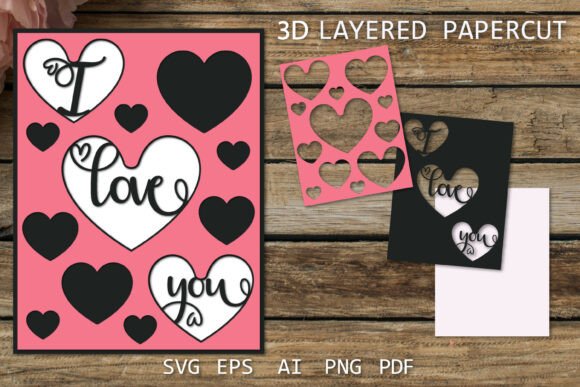
Creating a handmade card that truly captures the sentiment of "I Love You" requires more than just a nice message; it demands dimension, texture, and precision. The Layered Valentines Day Card SVG design offers exactly this, transforming flat paper into a stunning three-dimensional piece suitable for Valentine's Day, birthdays, or any special occasion. Whether you intend to use this as a layered paper card, a decorative gift sign, or a template for a broader paper craft project, understanding how to work with these digital files is the difference between a professional finish and a frustrating afternoon.
This specific design, formatted for an A2 card (4.25 x 5.5 inches) at a high resolution of 1700x2200 px, provides all elements as vector files. This flexibility allows you to change sizes and colors effortlessly. However, simply downloading the ZIP file containing EPS10, AI, PNG, and PDF formats does not guarantee success. Many crafters overlook critical details regarding file compatibility, cutting settings, and layer alignment, leading to wasted materials and subpar results.
Understanding the Value of Vector Files in Layered Cards
The primary advantage of the Layered Valentines Day Card SVG is its versatility. Unlike raster images that pixelate when enlarged, vector files like SVG, AI, and EPS maintain crisp edges regardless of scale. This is essential for paper crafting where clean lines define the quality of the final product. The package typically includes colored and black separated layers in both high-quality PNG and vector formats, giving you options for printing or direct machine cutting.
Many beginners mistakenly assume that all files in the download are interchangeable without consequence. While the PDF might be perfect for a home printer, it often lacks the editable paths required by cutting machines like Cricut or Silhouette. Similarly, using a low-resolution PNG for a large sign can result in jagged edges that ruin the aesthetic. Understanding the specific purpose of each file type—SVG for cutting, AI/EPS for professional editing, and PNG/PDF for printing—is the first step toward avoiding common pitfalls.
Common Mistakes When Using Cutting Machines
One of the most frequent errors involves neglecting to adjust the blade depth and pressure settings based on the paper weight. The Layered Valentines Day Card SVG design consists of multiple intricate layers. If the blade is too shallow, the machine will fail to cut through the thicker cardstock needed for structural integrity. Conversely, if the pressure is too high, the blade may slip and damage the cutting mat or tear the delicate inner layers.
Another overlooked detail is the nesting of layers. When preparing your mat, placing layers too close together can cause the machine to cut through adjacent pieces accidentally, especially if the material shifts during the process. Always leave adequate spacing between separate elements of the design. Furthermore, failing to mirror the image when working with heat transfer vinyl or specific adhesive-backed papers can result in reversed text and graphics, rendering the card unusable.
To avoid these issues, always perform a test cut on scrap paper before committing to your premium cardstock. Check the manufacturer's recommendations for the specific thickness of your paper and adjust the machine settings accordingly. If you are hand-cutting instead of using a machine, ensure you have a sharp rotary cutter or precision scissors, as dull tools will crush the edges of thin paper layers rather than slicing them cleanly.
Color Matching and Print Quality Considerations
When utilizing the included PNG or PDF files for printing, color accuracy is paramount. A common misunderstanding is assuming that what you see on your screen matches the printed output perfectly. Monitors emit light, while printers use ink, leading to significant variations in saturation and hue. If you plan to assemble a multi-layered card where each layer adds a different shade of red or pink, inconsistent printing can make the gradient look muddy rather than vibrant.
Additionally, many users forget to check the background transparency of their PNG files. While the package description notes a transparent background, some image editors or print drivers default to adding a white box around the image. This can create unsightly borders when you try to layer the printed piece onto a colored base card. Always verify the background setting in your software before sending the job to the printer.
A better approach is to calibrate your monitor and printer regularly. If you are using the vector files to change colors digitally, stick to standard CMYK values for professional printing or sRGB for home inkjet printers. For the best results with the Layered Valentines Day Card SVG, consider using heavy-weight cardstock (at least 300gsm) which holds color better and provides the stiffness needed for the layers to stand out effectively.
Evaluating File Compatibility Before Purchase
Before deciding to buy or download this design, it is crucial to evaluate your current software capabilities. The file package includes an EPS10 file, which is a standard for older Adobe Illustrator versions but may not open correctly in newer free software or basic design apps. If you do not own Adobe Creative Cloud, relying solely on the AI or EPS files might leave you unable to edit the design.
In such cases, the SVG files become your most valuable asset. They are widely supported by modern cutting machine software and many free vector editors. However, ensure your specific cutting machine software supports the version of SVG provided. Some very old machines struggle with complex SVGs that contain numerous grouped elements or embedded gradients. Always review the technical specifications of your equipment against the file requirements listed in the product description.
Furthermore, consider the intended scale of your project. The design is optimized for an A2 format (4.25 x 5.5 inches). While vectors are scalable, pushing a design meant for a small card up to a large wall sign size can reveal limitations in the intricacy of the line work. Very fine details might become lost or difficult to cut if enlarged significantly. If you plan to create a large sign, preview the design at 100% zoom to assess whether the details remain distinct.
Optimizing Your Workflow for Efficiency
Efficiency in paper crafting comes from preparation. Once you have downloaded the ZIP file containing the various formats, organize your folders immediately. Separate the colored layers from the black separated layers to avoid confusion during the assembly phase. Labeling your physical cuts according to the layer order in the design file saves time and prevents the frustration of trying to figure out which piece goes where after everything has been cut.
For those using the design as a template for their own projects, remember that the "I Love You" text and heart motifs are designed to interlock or stack in a specific way. Modifying the kerning of the text or the shape of the hearts without adjusting the corresponding layers can break the visual flow of the card. If you need to customize the message, do so within the vector editor before exporting the final cut file.
Finally, embrace the versatility of the format. Because the files include high-quality raster options with transparent backgrounds, you can also use this design for digital invitations or social media posts alongside your physical crafts. By understanding the strengths of each file type and avoiding the common traps of scaling, cutting, and printing, you can transform the Layered Valentines Day Card SVG into a masterpiece that conveys your message with clarity and elegance.