Practical Evaluation of the Birthday Gift Card Holder Papercut Design
In the landscape of digital crafting assets, the Birthday Gift Card Holder Papercut represents a specific intersection of utility and aesthetics that has gained traction among makers and small business owners. This resource is not merely a graphic file; it is a functional template designed for physical production. The core value proposition lies in its ability to transform flat paper into a three-dimensional object capable of holding monetary gifts or gift cards securely. For professionals managing event planning, entrepreneurs running craft-based businesses, or serious hobbyists looking to elevate their gifting game, understanding the technical specifications and practical application of this design is essential before committing time or resources.
Technical Specifications and File Delivery
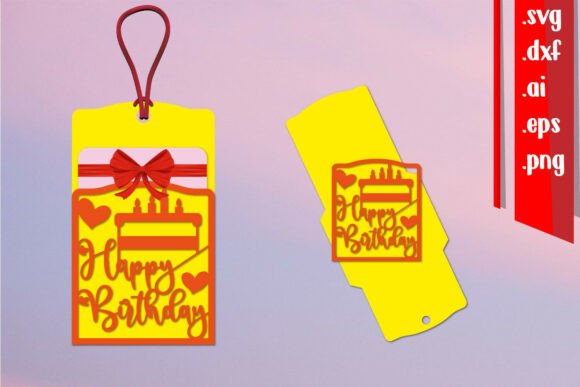
The immediate advantage of purchasing a digital asset like the Birthday Gift Card Holder Papercut is the efficiency of the delivery system. Unlike physical products that require shipping time, this resource is provided as an instant digital download. Upon completion of the transaction, the user receives a compressed zip file. Inside this archive, the organization is logical and streamlined: each distinct design variation resides in its own dedicated folder. Within these folders, the creator provides five distinct file formats: SVG, DXF, AI, PNG, and EPS.
This multi-format approach addresses the diverse hardware and software ecosystems used by modern crafters. The SVG (Scalable Vector Graphics) format is critical for users operating with consumer-grade cutting machines like Cricut or Silhouette Cameo, ensuring clean lines and scalability without pixelation. The DXF format caters to those utilizing laser cutters or CAD-integrated workflows, while AI (Adobe Illustrator) and EPS files offer professional designers the flexibility to edit layers, adjust colors, or modify dimensions within industry-standard vector software. The inclusion of PNG files provides a raster preview, which is useful for quick visual checks or digital mockups without needing heavy vector software.
Structural Integrity and Assembly Process
The design philosophy behind the Birthday Gift Card Holder Papercut prioritizes simplicity without sacrificing structural integrity. It is constructed as a layered project, meaning the final object is composed of multiple cut pieces stacked in a specific sequence. The instructions follow a straightforward "cut, fold, and stick" methodology. This assembly process is intentionally designed to be accessible to individuals with varying levels of crafting experience.
From a practical standpoint, the layering technique adds depth and visual interest to the final product, making it significantly more attractive than a simple folded card. However, the success of the assembly relies heavily on precision. Because the design depends on the alignment of layers, the quality of the cutting tool matters. A dull blade on a die-cutting machine can result in jagged edges that prevent the tabs from fitting snugly into their slots, compromising the stability of the holder. Conversely, using high-quality cardstock and a sharp blade ensures that the folds are crisp and the adhesive bonds hold firm over time.
Material Considerations for Durability
While the digital file dictates the shape, the physical material chosen by the user determines the longevity of the Birthday Gift Card Holder Papercut. Standard printer paper is generally insufficient for this application, as it lacks the rigidity required to support the weight of a gift card and maintain its upright structure. Professionals recommend using cardstock ranging from 65 lb to 80 lb weight. Thicker materials provide the necessary stiffness for the "fold and stick" mechanism but may require multiple passes through a cutting machine. For a premium finish, textured papers or patterned scrapbook paper can be utilized, though users must account for how different textures affect the cutting speed and blade wear.
Real-World Performance and Use Cases
Evaluating the Birthday Gift Card Holder Papercut in real-world scenarios reveals its versatility across several demographics. For adults aged 20 to 50, particularly those who value personalized gestures, this design solves a common problem: the presentation of cash or gift cards often feels impersonal. A generic envelope lacks the thoughtfulness expected at birthdays, corporate events, or family gatherings. By using this papercut design, the giver transforms a standard monetary gift into a keepsake.
Small business owners and Etsy sellers find particular value in this resource due to the scalability of the production process. Once the workflow for cutting and assembling is established, these holders can be produced in batches, creating a low-cost, high-margin add-on product for existing craft shops. The layered nature of the design allows for customization; for instance, a seller might use different colored layers to match a client's brand palette or a specific birthday theme. This flexibility makes the Birthday Gift Card Holder Papercut a robust tool for inventory diversification.
Freelancers and educators also benefit from this asset. Event planners can use these holders for party favors or thank-you gifts, ensuring consistency in branding and presentation. Educators teaching design or vocational arts can utilize the various file formats to demonstrate the principles of vector graphics, layering, and physical prototyping. The transition from a digital file to a tangible object serves as an excellent case study in digital fabrication.
Usability and Workflow Integration
Integrating the Birthday Gift Card Holder Papercut into an existing creative workflow requires minimal friction, provided the user possesses the appropriate hardware. The presence of AI and EPS files means that advanced users can deconstruct the design to create variations, such as changing the text to say "Happy Anniversary" instead of "Happy Birthday," effectively repurposing the base geometry for other occasions. This modularity extends the long-term value of the purchase beyond a single birthday season.
However, there are realistic limitations to consider. The "layered" requirement means that producing a single unit involves cutting multiple pieces, which increases machine runtime compared to a single-layer cut. For high-volume production runs, this factor must be calculated into labor costs. Additionally, the reliance on manual assembly ("fold and stick") introduces a variable in quality control. While the design is simple, rushing the gluing process can lead to misaligned layers, resulting in a wobbly or unsightly final product. Patience and attention to detail are non-negotiable for achieving professional results.
Consistency and Reliability
One of the strengths of digital papercut designs is consistency. Unlike hand-drawn templates, the vector paths in the Birthday Gift Card Holder Papercut ensure that every copy produced is identical in dimension. This reliability is crucial for businesses where brand consistency is paramount. Whether producing ten units or one hundred, the output remains uniform, assuming the cutting parameters remain constant. The inclusion of multiple file formats further guarantees that the design will render correctly across different software platforms, reducing the risk of compatibility errors that often plague digital downloads.
Who Benefits Most From This Resource?
The Birthday Gift Card Holder Papercut is best suited for individuals who already possess a basic understanding of digital crafting tools. It is less appropriate for someone looking for a no-tool, print-and-fold solution unless they are willing to manually trace and cut the shapes, which negates the precision benefits of the vector files. The primary beneficiaries include:
- Craft Entrepreneurs: Those seeking scalable, customizable products to sell online or at markets.
- Event Coordinators: Professionals requiring branded, high-quality packaging for gifts and tokens of appreciation.
- Design Students and Hobbyists: Individuals interested in exploring vector design and physical prototyping.
- Personal Givers: People who wish to create memorable, handmade presentations for significant life events.
For these groups, the investment in time and materials yields a product that communicates care and professionalism. The design bridges the gap between digital convenience and tactile craftsmanship.
Final Assessment
The Birthday Gift Card Holder Papercut stands out as a practical and versatile asset within the digital crafting community. Its strength lies not just in the aesthetic appeal of the final product, but in the comprehensive nature of the file package and the logical design structure. By offering multiple file formats, it accommodates a wide range of equipment and skill levels. The layered construction adds a dimension of quality that separates it from simpler alternatives, while the "cut, fold, and stick" method ensures accessibility.
While the assembly process requires patience and the choice of materials impacts the final durability, these are manageable factors for any serious crafter. When evaluated against the criteria of usability, flexibility, and presentation, this resource offers substantial value. It empowers users to move beyond generic gift-giving solutions and creates opportunities for customization and small-scale manufacturing. For anyone looking to enhance their portfolio of crafting projects or improve the presentation of their gifts, the Birthday Gift Card Holder Papercut is a reliable and effective tool worth considering.