Elevating Visual Narratives with the Textured Metallic Sphere on PNG Background
In the rapidly evolving landscape of digital media, the quality and versatility of visual assets have become paramount. For professionals ranging from graphic designers to marketing strategists, the ability to convey complex ideas through simple yet striking imagery is a competitive advantage. One such asset that has gained significant traction in recent years is the Textured Metallic Sphere on PNG Backgrou. This specific type of 3D render combines the industrial allure of metal with the technical convenience of transparency, creating a powerful tool for modern creative workflows.
As we move further into an era dominated by high-fidelity web experiences, immersive advertising, and sophisticated user interfaces, the demand for assets that are both aesthetically rich and technically flexible continues to grow. The textured metallic sphere represents more than just a geometric shape; it is a symbol of precision, durability, and futuristic innovation. When isolated on a transparent background, it becomes a chameleon-like element capable of adapting to diverse design contexts without compromising visual integrity.
The Anatomy of a High-Impact Visual Asset
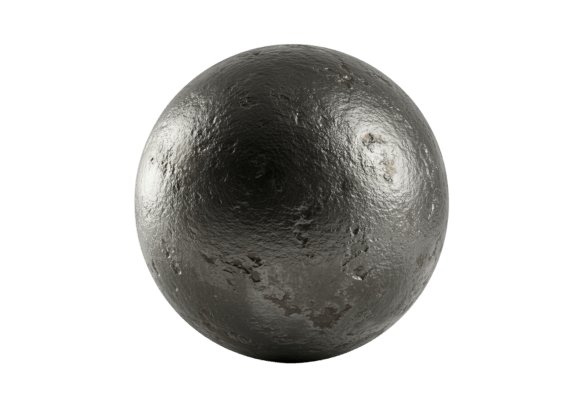
To understand why this specific asset resonates so deeply with creators, one must first examine its constituent elements. A Textured Metallic Sphere on PNG Backgrou is not merely a smooth, reflective ball. It is a carefully crafted 3D render that incorporates a variety of surface characteristics. These include rough textures, grunge patterns, and irregularities that mimic real-world materials like weathered steel, polished silver, or even cosmic rock formations found in outer space.
The "metallic" aspect refers to the material properties simulated within the render. Unlike flat vector graphics, these spheres utilize advanced lighting and shading techniques to create a sense of depth and volume. The surface might appear shiny and glossy in some areas, reflecting light sources with high fidelity, while other parts may show signs of wear, scratches, or a matte finish. This interplay between the smooth and the rough creates a tactile quality that engages the viewer's senses, even on a two-dimensional screen.
Furthermore, the inclusion of a PNG file format is critical. The Portable Network Graphics (PNG) standard supports alpha channels, allowing for a transparent background. This means the sphere can be placed over any color, image, or video sequence without the need for manual masking or complex compositing. Whether the background is a stark black void representing space or a vibrant corporate gradient, the sphere integrates seamlessly, maintaining its crisp edges and realistic shadows.
Bridging the Gap Between Industrial Aesthetics and Digital Trends
The rise of the textured metallic sphere aligns perfectly with broader industry trends favoring realism and tangible textures in digital spaces. In the past, flat design dominated the web, prioritizing simplicity and minimalism. However, as technology has advanced, there has been a noticeable shift towards skeuomorphism and neo-skeuomorphism—design styles that incorporate realistic details to make digital objects feel more physical and interactive.
This trend is particularly evident in the tech and automotive sectors, where brands strive to communicate strength, reliability, and cutting-edge engineering. A Textured Metallic Sphere on PNG Backgrou serves as an ideal metaphor for these values. Its heavy, solid appearance suggests stability, while its polished, reflective surfaces hint at innovation and future-readiness. Marketers and entrepreneurs are increasingly leveraging these assets to create branding materials that stand out in a crowded marketplace.
Moreover, the aesthetic of the sphere often draws inspiration from scientific and geological concepts. The cratered, rocky surfaces found in some variations evoke the mystery of outer space and the vastness of the cosmos. This connection to science and exploration makes the asset highly relevant for industries involved in research, education, and environmental sustainability. By using an object that looks like a planet or a meteorite, creators can instantly establish a narrative of discovery and global impact.
Why Professionals Are Prioritizing Realistic 3D Elements
The shift towards realistic 3D elements like the textured metallic sphere is driven by changing consumer expectations. Today's audience is accustomed to high-definition visuals across all platforms, from social media feeds to streaming services. Generic clip art and low-resolution images no longer suffice to capture attention or build trust. Instead, consumers expect visuals that feel authentic and meticulously crafted.
For freelancers and agencies, utilizing a Textured Metallic Sphere on PNG Backgrou offers a practical solution to meet these demands without the time-consuming process of creating custom 3D models from scratch. These pre-rendered assets allow for rapid prototyping and iteration. A designer can drop the sphere into a layout, adjust its scale, apply filters, or composite it with other elements to create a unique composition in minutes rather than hours.
This efficiency is crucial in fast-paced environments where deadlines are tight and the need for high-quality output is constant. The ability to access a library of varied textures—from cold, industrial metals to warm, golden orbs—provides endless creative possibilities. It empowers creators to experiment with different moods and tones, ensuring that every project feels distinct and tailored to the client's specific brand identity.
Practical Applications Across Industries
The versatility of the textured metallic sphere extends far beyond abstract art. Its applications are widespread across various sectors, each leveraging the asset's unique properties to achieve specific goals.
- Digital Marketing and Advertising: In ad campaigns, the sphere acts as a focal point, drawing the eye and anchoring the message. Its reflective nature can be used to subtly incorporate brand colors or logos, creating a cohesive visual identity. The contrast between the dark, rocky texture and bright highlights makes it effective for call-to-action buttons or promotional banners.
- Web and UI/UX Design: User interface designers use these spheres as decorative elements or loading indicators. The macro detail and close-up view of the texture add a layer of sophistication to websites, making them feel more premium. The transparent background ensures that the element does not clash with the site's existing color palette.
- Product Visualization: For companies selling hardware or industrial equipment, the sphere can serve as a stylistic representation of their products' core components. It conveys the idea of robustness and precision engineering, reinforcing the value proposition of the product.
- Social Media Content: On platforms like Instagram and LinkedIn, high-quality visuals are essential for engagement. A post featuring a stunning, detailed metallic sphere can stop the scroll, prompting users to pause and interact with the content. The abstract nature of the object invites curiosity and interpretation.
The Future of Texture and Materiality in Design
Looking ahead, the importance of texture and materiality in digital design is only set to increase. As virtual reality (VR), augmented reality (AR), and mixed reality (MR) technologies become more mainstream, the line between the physical and digital worlds will continue to blur. Assets that convincingly simulate real-world materials will be essential for creating immersive experiences.
The Textured Metallic Sphere on PNG Backgrou is a precursor to this future. It demonstrates how static images can possess a dynamic quality, suggesting movement, weight, and interaction. As rendering engines improve and AI-driven design tools evolve, we can expect even more sophisticated variations of this concept. We may see spheres that react to user input, change texture based on context, or integrate seamlessly into holographic displays.
However, the fundamental appeal of the object remains rooted in its ability to tell a story. Whether it represents a planet in a distant galaxy, a piece of machinery in a factory, or a symbol of unity and wholeness, the sphere is a universal icon. Its adaptability ensures that it will remain a staple in the toolkit of creative professionals for years to come.
Optimizing Workflows with High-Quality Assets
For businesses and individuals looking to optimize their creative workflows, investing in high-quality assets like the textured metallic sphere is a strategic decision. It reduces the time spent on production, lowers costs associated with custom photography or 3D modeling, and elevates the overall quality of the final deliverable.
When selecting such assets, it is important to consider the resolution, lighting conditions, and texture complexity. A high-resolution render allows for scaling without loss of quality, which is essential for large-format prints or high-density screens. Additionally, the lighting should be neutral enough to allow for integration into various scenes but detailed enough to showcase the material properties effectively.
By incorporating these elements into their projects, creators can ensure that their work stands out in an increasingly visual world. The Textured Metallic Sphere on PNG Backgrou is not just an image; it is a statement of professionalism, creativity, and forward-thinking design.
In conclusion, the textured metallic sphere represents a convergence of art, technology, and utility. It satisfies the human desire for beauty and order while meeting the practical needs of modern digital production. As we continue to navigate a world defined by rapid technological change, assets that bridge the gap between the tangible and the virtual will play a pivotal role in shaping our visual culture. For anyone serious about design, marketing, or communication, understanding and utilizing this powerful element is a step toward creating more impactful and memorable experiences.